
What Does an EMG Test Evaluate?
An Electromyography (EMG) test is an essential diagnostic technique used to evaluate the operational health conditions of your muscle groups and the specialized nerve cells (motor neurons) that regulate them. When muscles are functional, they transmit precise electrical waveforms that fluctuate depending on physical effort parameters.
At Total Diagnostic Center in Freeganj, Ujjain, we use sensitive diagnostic sensors to convert these intricate biological signals into clear graphs and sound cues. This helps identifying muscle dysfunctions or neurological transmission defects reliably.
Why Do Clinicians Order an EMG?
- Unexplained Muscle Weakness: Pinpoints whether weakness originates in the muscle tissues or along connecting nerve branches.
- Motor Neuron Diseases: Vital for diagnosing structural conditions like Amyotrophic Lateral Sclerosis (ALS).
- Muscle Disorders: Identifies intrinsic muscle issues such as polymyositis or muscular dystrophy.
- Nerve Root Lesions: Maps spinal nerve compressions associated with herniated discs (herniated nucleus pulposus).
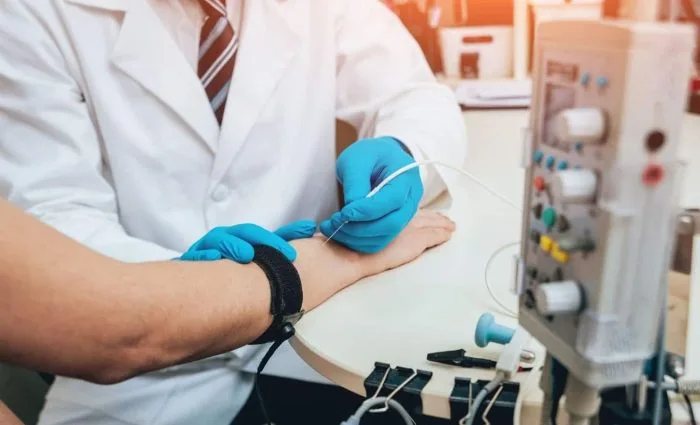
Motor Unit Potentials Tracking
Specialized instrumentation charts and translates internal microvolt variances into legible diagnostic graphs.
The Twin Phases of EMG Assessment
An EMG test systematically evaluates your muscle fibers across two separate physical functional states:
1. Resting Muscle Tracking
Healthy muscle tissue is structurally quiet when relaxed, displaying zero electrical patterns. If involuntary micro-signals are captured while at rest, it can indicate a nerve supply disruption or tissue hyper-irritability.
2. Active Contraction Tracking
As you intentionally flex or contract the muscle, electrical activity appears on screen. The shape, wave size, and frequency of these signals show clinicians how well your muscles recruit nerve pathways under load.
Patient Safety & Preparation Steps
Please strictly follow these pre-test parameters to ensure an accurate and seamless evaluation process:
Bathing & Topical Restrictions
Take a warm bath or shower before your slot to clear surface oils. Avoid applying skin creams, body oils, or moisturizers, as dry skin ensures optimal sensor contact.
Bleeding Disruptions & Medications
Inform our diagnostic staff if you take blood thinners (like Warfarin, Aspirin, or Clopidogrel) or have bleeding conditions like hemophilia, as the test involves fine needle sensors.
Temperature Regulations
Low muscle temperatures can skew electrical reading outputs. Our lab spaces are temperature-controlled, but we advise keeping extremities warm before entry.
EMG Slots Availability in Ujjain
Need details on single-limb vs. full-body EMG protocols? Send a query through our WhatsApp channel or call our support desk directly in Freeganj for quick answers.